Hey farm gals, it’s Kara from Lange Girl Farms here in Southeast Michigan.
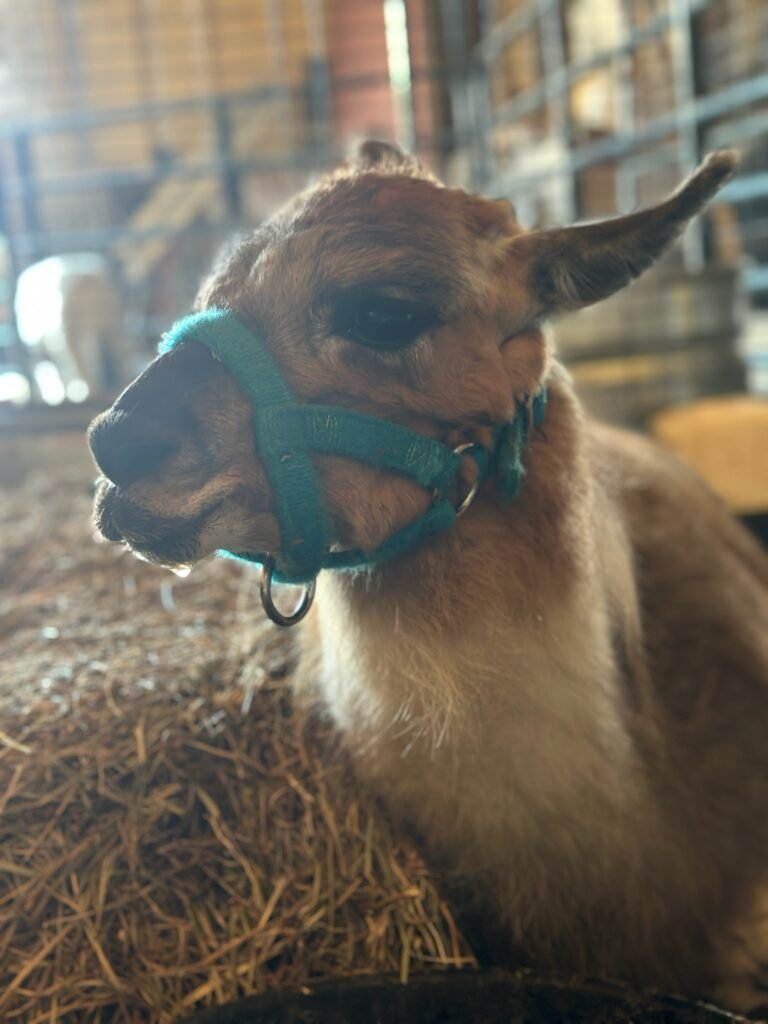
This morning I was out before the sun came up doing our usual dawn check. The horses were grazing peacefully in the back pasture under the dew, and I found myself missing our last llama, Lakota. He passed not long ago, and we’re already looking for another because guard llamas have been such an essential part of our setup. They’re worth every penny for the peace of mind they bring. Our pack of huskies helps too—their dog yard and energy probably sounds like a big canine den to anything wild, which might be why we’ve mostly just seen coyotes around here rather than had real trouble.
I do believe in protecting what’s ours. If a coyote started threatening my animals on our own land, I wouldn’t hesitate to shoot it. That’s part of responsible homesteading. But I also believe natural habitats and public lands should support wildlife without blanket lethal campaigns that end up harming more than they help. Some loss is expected when you free-range chickens—I’ve had actual losses to foxes and hawks over the years, but only when they were out on the land. Our coop and fenced run stay fully secured, and that makes all the difference. The guard animals, good fencing, and common sense go a long way.
That personal balance is exactly why I’ve been digging deep into what’s happening out West on our public lands. We’ve all seen the headlines and the heartbreaking photos: coyote pups, wild horses being rounded up, bison herds losing grazing permits, and now the quiet reopening of M-44 “cyanide bombs” on BLM land. For months I’ve been quietly researching the laws, the money, the names, and the numbers. What I found isn’t some grand conspiracy—it’s a century-old system that quietly funnels taxpayer subsidies, cheap forage, and federal predator control mainly to a relatively small number of large operators while the rest of us pay the environmental and financial bill.
This series is my full nerd deep-dive into how we got here and why it matters for every single one of us trying to build regenerative, no-toxin, animal-first homesteads.
Because public lands aren’t “somewhere else.” They’re part of the same story as the guard animals we rely on, the soil we’re trying to heal, and the food system we’re trying to fix.
The Quick Snapshot Most People Miss
The Bureau of Land Management (BLM) manages about 245 million acres, with roughly 155 million acres currently authorized for livestock grazing. Permits run for 10 years and are tied to “base property” (your private land with water and forage). Fees are set by a formula that hasn’t been meaningfully updated since the 1970s: $1.69 per Animal Unit Month (AUM) in 2026—one cow-calf pair for one month. On private Western land the same month often costs $16–$25 or more.
Taxpayers make up the difference. BLM collects roughly $14–21 million in grazing fees annually while the full program (administration, range improvements, drought aid, predator control) costs taxpayers several hundred million more when you add in all the indirect support.
And here’s the part that really got me: the benefits are extremely concentrated.
Recent analyses of BLM data show that the top 10% of permittees control roughly two-thirds of all grazing Animal Unit Months on BLM land. The bottom half of permittees account for less than 4%. This isn’t mostly small family ranches—it’s large corporate and wealthy operations that have turned public-land grazing into a subsidized input for their businesses.
Who Actually Holds the Biggest Permits?
Let me name some of the biggest players so you can picture it:
• J.R. Simplot Company (the giant agribusiness best known for potatoes and McDonald’s fries) is the single largest BLM rancher through subsidiaries like Dickshooter Cattle Co. They hold roughly 150,000 AUMs across multiple states. In one recent year alone they saved approximately $2.4 million compared to private-land rates.
• Stan Kroenke (billionaire owner of the LA Rams, Arsenal, and now one of America’s largest private landowners) runs the Winecup Gamble Ranch on the Nevada-Utah border. Thousands of head of cattle on massive public allotments, paying around $50,000 in fees for grazing that would cost millions on the open market.
• Rupert Murdoch holds the Beaverhead Ranch in Montana—again, huge public-land access for a tiny fraction of market-rate fees.
• Mining conglomerates (Nevada Gold Mines, Freeport-McMoRan, etc.) run thousands of head across millions of acres, often using grazing permits to secure water rights and offset mining impacts.
These operators own the cattle outright. The permits attach to their private “base property” and function almost like de-facto property rights—banks even accept them as collateral. Meanwhile, smaller family ranches and regenerative operations often struggle with the same system.
The Cyanide Bomb Connection
This all ties straight into the M-44 “cyanide bombs” that have been in the news again.
These spring-loaded devices are staked in the ground, baited for coyotes and foxes, and fire a dose of sodium cyanide into the mouth of whatever pulls the trigger. Death is fast but nasty. They are inherently indiscriminate—pets, non-target wildlife, and occasionally people (including children) have been injured or killed over the years.
Under the Biden administration, BLM signed a 2023 memorandum of understanding with USDA Wildlife Services that banned M-44 use on its lands for public safety and non-target reasons. In April 2026 the Trump administration quietly rolled that ban back via an internal memo, reopening case-by-case use through 2031.
The same agency also drops millions of oral rabies vaccine baits from planes every year. Their FY2026 budget is around $152 million. Taxpayers are funding both lethal predator control for subsidized ranchers and preventive rabies work on the same landscapes.
Meanwhile, study after study shows that non-lethal tools—guard dogs, donkeys, llamas, range riders, rotational grazing, fladry, night penning—often reduce predation 50–95%+ long-term and are more cost-effective once the upfront investment is made. Coyotes are incredibly resilient; blanket lethal control frequently triggers compensatory breeding and doesn’t solve the root issue.
On our own farm, the combination of guard animals, good fencing, and our huskies has kept losses minimal outside of those occasional free-ranging incidents. That’s the model that scales on a homestead—and it could scale smarter on public lands too.
Wild Horses, Bison & the Prioritization Problem
The same laws that lock in cheap grazing for cattle also squeeze native wildlife.
In January 2026 BLM revoked grazing permits for American Prairie’s conservation bison herd in Montana, citing the 1934 Taylor Grazing Act: permits are only for “domestic livestock” used for “production-oriented purposes.” Conservation bison don’t qualify, even though they’re managed under state livestock rules and help restore prairie ecosystems.
Wild horse Herd Management Areas tell the same story. On one Utah complex, BLM authorizes thousands of cows and sheep but caps wild horses at 80–170 animals. When horses exceed “appropriate management levels,” they’re gathered and often removed. Livestock stocking rates, however, are maintained for economic reasons.
This is not balanced multiple-use under the Federal Land Policy and Management Act (FLPMA) of 1976. It’s livestock production winning again and again.
The Beef Industry Tie-In
All of this subsidized public-land forage flows into a highly concentrated beef supply chain.
The U.S. cattle herd hit a 75-year low in early 2026. Packers (the top four control ~85% of fed-cattle slaughter, two of them majority foreign-owned) have been under active DOJ antitrust investigation. Ranchers often receive low prices while consumers pay record retail. Public-land grazing—small nationally (1–3% of total forage) but critical for many Western operations—acts as a quiet subsidy that keeps marginal supply flowing into that concentrated system.
The Regenerative Path Forward
Here’s what keeps me hopeful on our own homestead.
We already know what works: guard animals (llamas included!), rotational grazing, soil-building, no-toxin practices. Non-lethal predator management is more effective long-term where it makes sense. Some targeted shooting on your own land is part of reality, but broad-scale toxins on public natural habitats don’t have to be the default. Market-rate grazing fees or stricter carrying capacities would level the playing field. Retiring sensitive allotments for conservation, expanding agrivoltaics done right, and prioritizing urban/distributed solar would take pressure off rural lands.
Public lands belong to all of us. They should support multiple uses—including the kind of regenerative livestock operations that build soil, sequester carbon, and work with nature instead of waging chemical war on it.
In the rest of this series we’re going to dig even deeper:
• The exact laws and fee formulas that have locked this in for 90 years
• The full list of biggest permit holders with the numbers
• The science on guard animals vs. M-44s
• Wild horses, bison, and the wildlife squeeze
• How it all connects to packer concentration and your grocery bill
I’ll also share practical things we can all do—whether you’re on 5 acres in Michigan or dreaming of Western grazing.
This isn’t about being anti-rancher or anti-beef. It’s about asking whether the current system is truly serving the small regenerative producers, the wildlife, and the taxpayers who foot the bill—or whether it’s time to update a 1930s policy for a 21st-century regenerative future.
I’d love to hear from you ladies. Have you seen big solar projects or grazing conflicts in your area? Do you run guard animals (or huskies!) and wonder why the feds still rely on toxins? Drop your thoughts, questions, or experiences below—I really do read every single comment.
With love and dirt under my nails,
Kara
Lange Girl Farms